

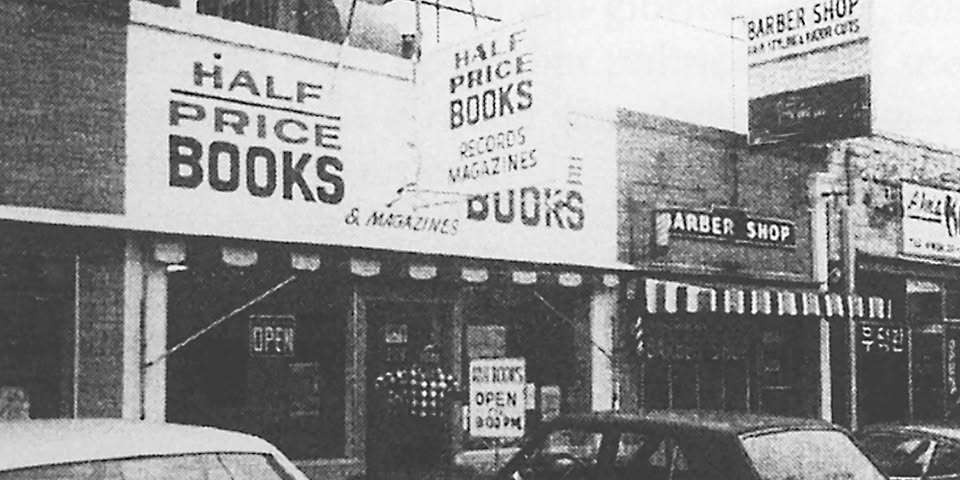
More than five decades after opening its first store, this Texas-born retailer continues to build its business around affordable books, secondhand treasures, environmental responsibility, and a commitment to literacy.
In an era when online shopping and digital entertainment have transformed how Americans consume information, one Texas company has built a lasting business around a traditional idea: giving books and other entertainment a second life.
Half Price Books, founded in Dallas in 1972, has grown from a modest used-book shop into the nation's largest family-owned chain of new and used bookstores, with approximately 120 locations across 19 states.
Its success reflects more than an appetite for inexpensive reading material. The company has developed a business model combining affordable merchandise, literary discovery, community involvement, and environmental responsibility.
From a Laundromat to a National Retailer
The Half Price Books story began on July 27, 1972, when Pat Anderson and Ken Gjemre opened a bookstore inside a converted Dallas laundromat.

Their concept was straightforward: purchase books from the public and resell them at affordable prices, offering customers an alternative to traditional bookstores.
The founders advertised their willingness to buy books in the local newspaper, quickly attracting inventory and customers. Their original philosophy was to buy and sell virtually anything ever printed or recorded, except yesterday's newspaper.
Additional stores followed, and the neighborhood operation gradually developed into a national retail business.
Despite that growth, the company remains connected to its founding family.
Sharon Anderson Wright, daughter of co-founder Pat Anderson, began working at the original store at age 13, sorting and shelving paperbacks. She subsequently managed stores, advanced through corporate leadership, and became company president in 1996.
Today, Wright serves as chief executive officer, while longtime executive Kathy Doyle Thomas serves as president.
A Different Kind of Shopping Experience
Unlike conventional bookstores that primarily sell newly published titles, Half Price Books builds much of its inventory around merchandise purchased directly from customers.
Consequently, selections vary considerably between locations.
Shoppers may discover contemporary bestsellers alongside out-of-print novels, historical works, children's books, collectible editions, vinyl records, movies, and comics.

For many customers, browsing becomes part of the attraction. Visitors can explore shelves filled with unexpected discoveries, sometimes finding books or recordings difficult to locate elsewhere.
The company also sells new merchandise and operates an online storefront. Its wholesale division, Texas Bookman, supplies overstock merchandise across numerous categories.
This combination of secondhand retailing, new products, collectibles, and online commerce helps the company adapt to changing shopping habits.
Literacy as a Community Investment
Community involvement has been central to the company's identity since its founding.
Its mission emphasizes fair treatment of customers and employees, promoting literacy, environmental responsibility, and maintaining a sustainable business.
Half Price Books donates books to organizations serving communities where access to reading materials may be limited. Educators and qualified nonprofits can request donations supporting literacy and education.

Its Literacy Partner Program supports local nonprofit organizations working to improve reading skills. Customers can contribute through donation boxes at store registers, while participating organizations receive additional visibility during National Literacy Month.
Teachers and librarians also benefit from an educator discount program offering eligible participants 10% off qualifying in-store purchases.
These initiatives connect the company's commercial activities with its broader commitment to making reading materials more accessible.
Environmental Responsibility Built Into the Business
Long before sustainability became a common corporate priority, Half Price Books operated a business centered on reuse.
Every book purchased from a customer and returned to circulation extends the useful life of an existing product.
The company has eliminated single-use plastic shopping bags nationwide and incorporates recycled materials into its operations.
Environmental initiatives include recyclable carpeting, recycled office supplies, environmentally sensitive building materials, and marketing materials printed on recycled paper.
Half Price Books also uses intermodal transportation to help reduce distribution-related emissions, while donations provide another destination for excess inventory.
Keeping the Bookstore Relevant
Half Price Books emphasizes a workplace culture built around shared interests in literature, music, and popular culture.

Its HPB Reads blog extends the company's literary interests online through reading recommendations, author interviews, and curated book lists.
Meanwhile, physical stores offer something digital marketplaces cannot entirely reproduce: wandering through shelves, discovering an unexpected title, and leaving with something that wasn't on the shopping list.
More than 50 years after opening in a Dallas laundromat, Half Price Books continues to demonstrate how a traditional retail concept can evolve without abandoning its original purpose.
Its enduring proposition remains straightforward: books and other entertainment deserve to be enjoyed, shared, and rediscovered.
For more information, visit Half Price Books.